
Beauty Devices from China: What Importers Need to Know
For years, a handheld radiofrequency (RF) skin-tightening device from China was treated much like a hair dryer: a small household appliance, sold on e-commerce platforms with little more than an electrical safety report. That era has ended in China. If you import beauty devices from Chinese factories, the change affects you too, even though the rule itself only applies inside China.
What Changed
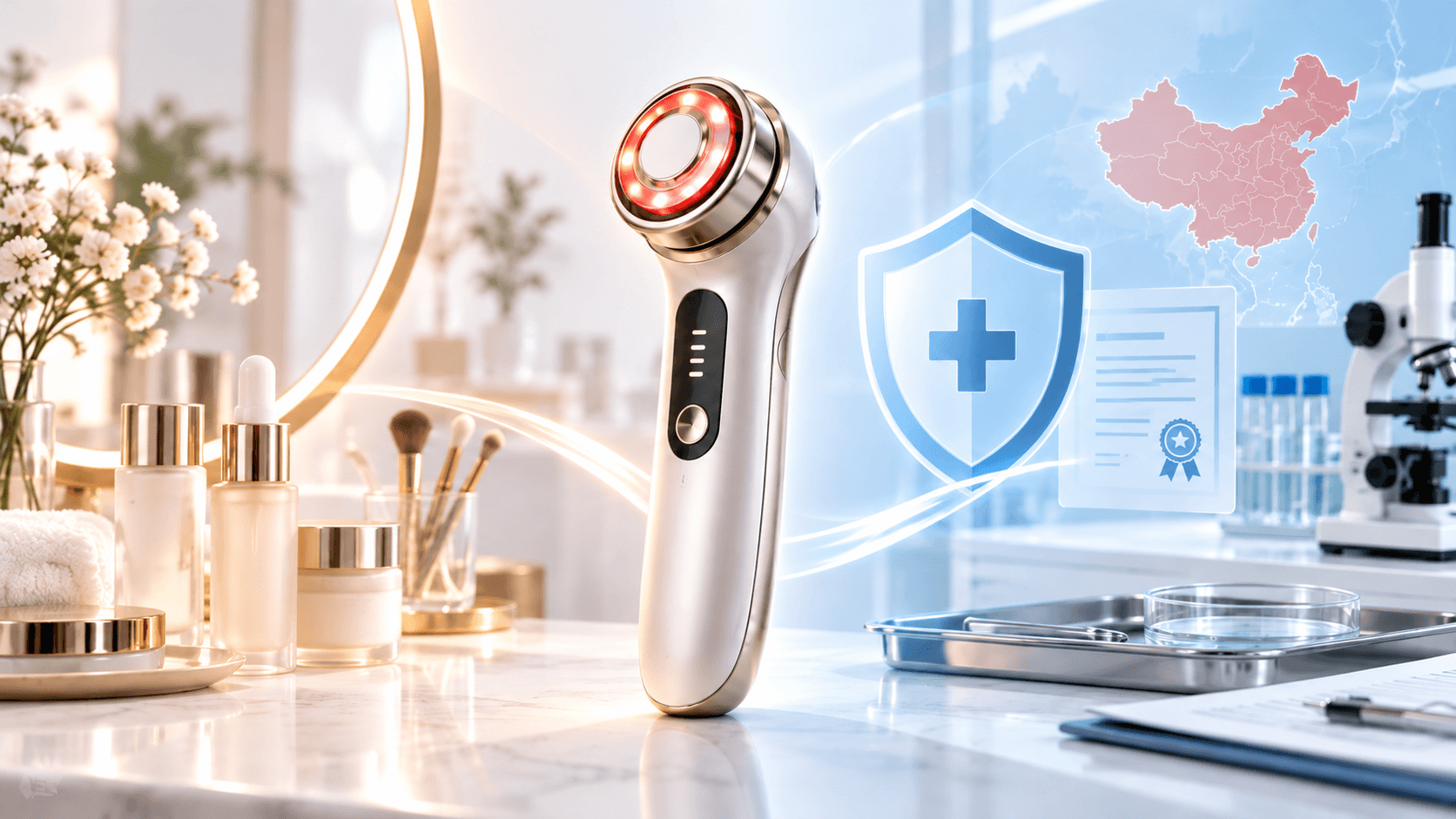
On April 1, 2026, a regulation first announced by China's National Medical Products Administration (NMPA) in 2022 and postponed once in 2024 finally took effect. RF devices intended to tighten skin, reduce wrinkles, shrink pores, treat acne or scars, or reduce fat are now Class III medical devices, the highest risk category in China, the same tier as implants. Without a Class III registration, they can no longer be manufactured, imported or sold in the Chinese market.
The classification follows intended use. A device sold only for massage, cleansing or serum absorption stays a household appliance. A device that combines RF with LED or microcurrent is classified at the level of its highest-risk function, which means Class III.
Only a Dozen Made It
Registration requires clinical trials, a medical-grade quality system and, depending on the product, 14 to 36 months of review, with costs running into millions of RMB. Each model needs its own certificate. By the deadline, only about a dozen home-use RF skin devices had been registered.
The rest of the market adjusted in two ways. Brands moved to LED masks, microcurrent and other non-RF categories, and online sales of beauty devices in China fell by roughly 11% in 2025. Meanwhile, factories with RF production lines, tooling and unsold stock looked for buyers elsewhere.

Where the Capacity Is Going
Chinese law does not prohibit manufacturing an unregistered RF device for export. It does, however, still require the factory to hold a medical device manufacturing license and operate under medical device quality rules. Since May 2026, the NMPA has issued two types of export sales certificates: one for products registered in China, and a second for products that are not registered domestically but are made by a licensed, compliant factory for export only.
This distinction matters to buyers. A factory offering RF devices at attractive prices may be a licensed medical device manufacturer with proper export documentation, or it may be a consumer electronics workshop clearing inventory it can no longer sell at home. From the outside, the two can look identical.
A Chinese Certificate Is Not Your Market's Approval
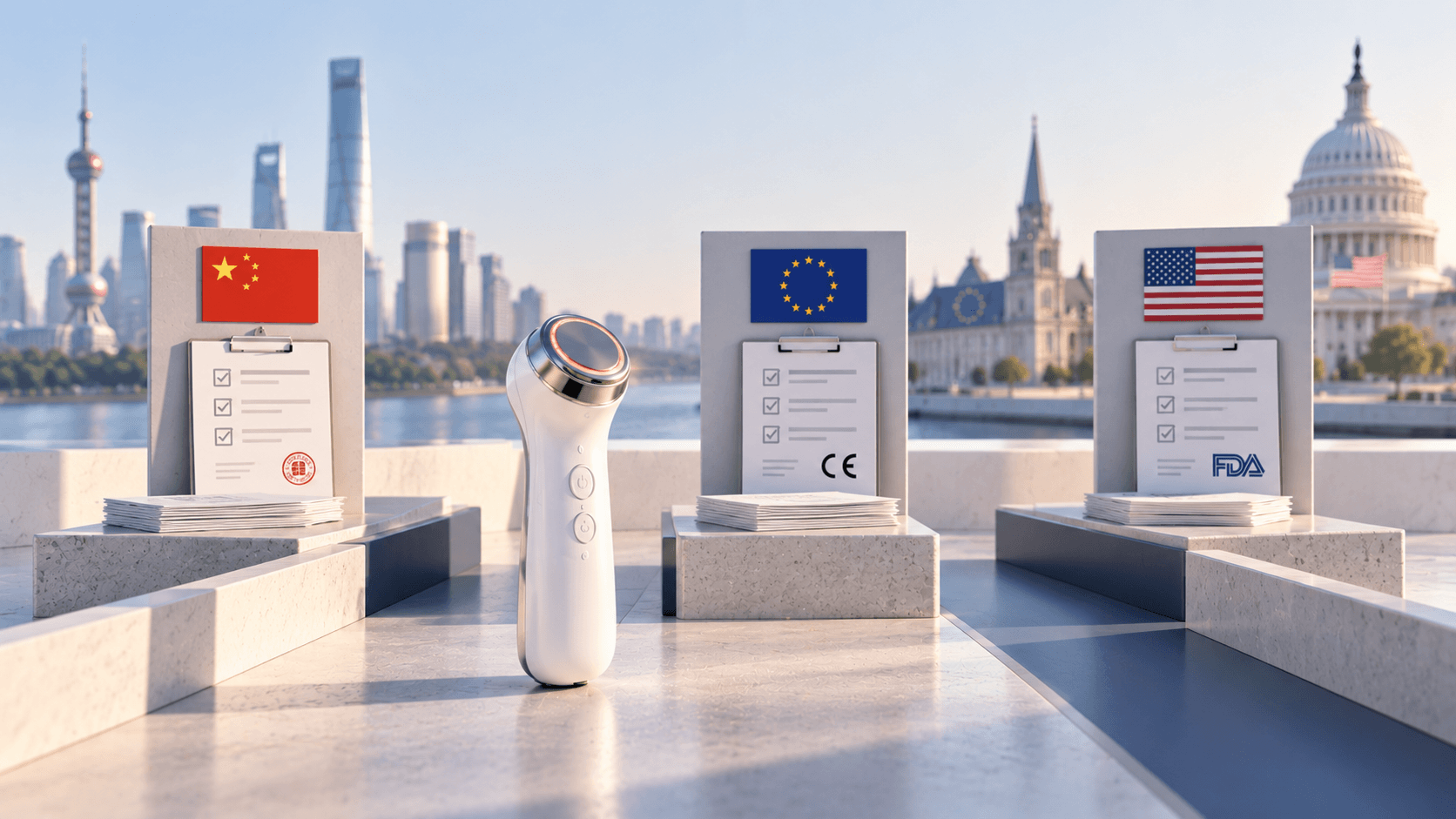
The more important point is that China's rules, in either direction, say nothing about whether a product can be sold in your market. NMPA registration is not recognized as market approval in the European Union, the United States or most other jurisdictions.
In the EU, and in Türkiye, which mirrors the EU framework, energy-based aesthetic devices are now regulated under the Medical Device Regulation even when they make no medical claim, and most require review by a notified body. In the United States, RF skin devices generally need FDA clearance before sale. Marketplaces have followed: listings for RF beauty devices are increasingly asked for regulatory clearance, not just a declaration of conformity.
Two document problems come up repeatedly. The first is a "CE certificate" issued by a private testing company under electrical safety or electromagnetic compatibility rules, which carries no weight for a product regulated as a medical device. The second is a safety report under the household appliance standard (IEC 60335), when a device that heats skin tissue is expected to be tested under the medical electrical equipment standards (IEC 60601 series).
Private Label Changes Your Role
Many buyers source an existing design and sell it under their own brand. Under EU rules, placing your name on a device generally makes you its legal manufacturer, with responsibility for the technical file, quality system and post-market monitoring. Chinese factories rarely hand over full design and firmware documentation, which leaves the brand owner accountable for files it cannot produce. From December 9, 2026, the revised EU Product Liability Directive also makes the EU importer directly liable for defective products made outside the EU.
What We Pay Attention to at FortuneSix
Regulatory changes in China often move risk rather than remove it. When domestic doors close, capacity looks for export buyers, and prices start to look attractive for reasons that have little to do with efficiency.
When we support clients sourcing beauty and personal care devices, we verify factory licensing and export documentation on the ground, check that test reports match the actual production model, and align the product's documentation with what the destination market requires before an order is placed. For many buyers, the right answer is a well-documented LED or microcurrent product rather than an RF device with gaps in its file.
If you are sourcing beauty devices from China and want to know what your supplier's documents actually cover,